Data, migration, workflows
Revisiting legacy processes and workflows for growing information volumes and modern constraints.
.brief

problem
I was contacted by a team of executives to gather insight from our key clients about a specific operation: service data deployment. This operation was flagged critical, even dangerous at times, and severely required attention, but we didn’t know where to start.
solution
This project has been dormant for some time, and our goal was to revive it, make it shine again. So I started by investigating about the feature, met plenty of users, and observed what these people were trying to achieve and how they did it. Then I organized a workshop with our execs to plan a strategy around this situation, and I was engaged with engineers from POC to final delivery... and a bit more than that as you’ll see below.
Research
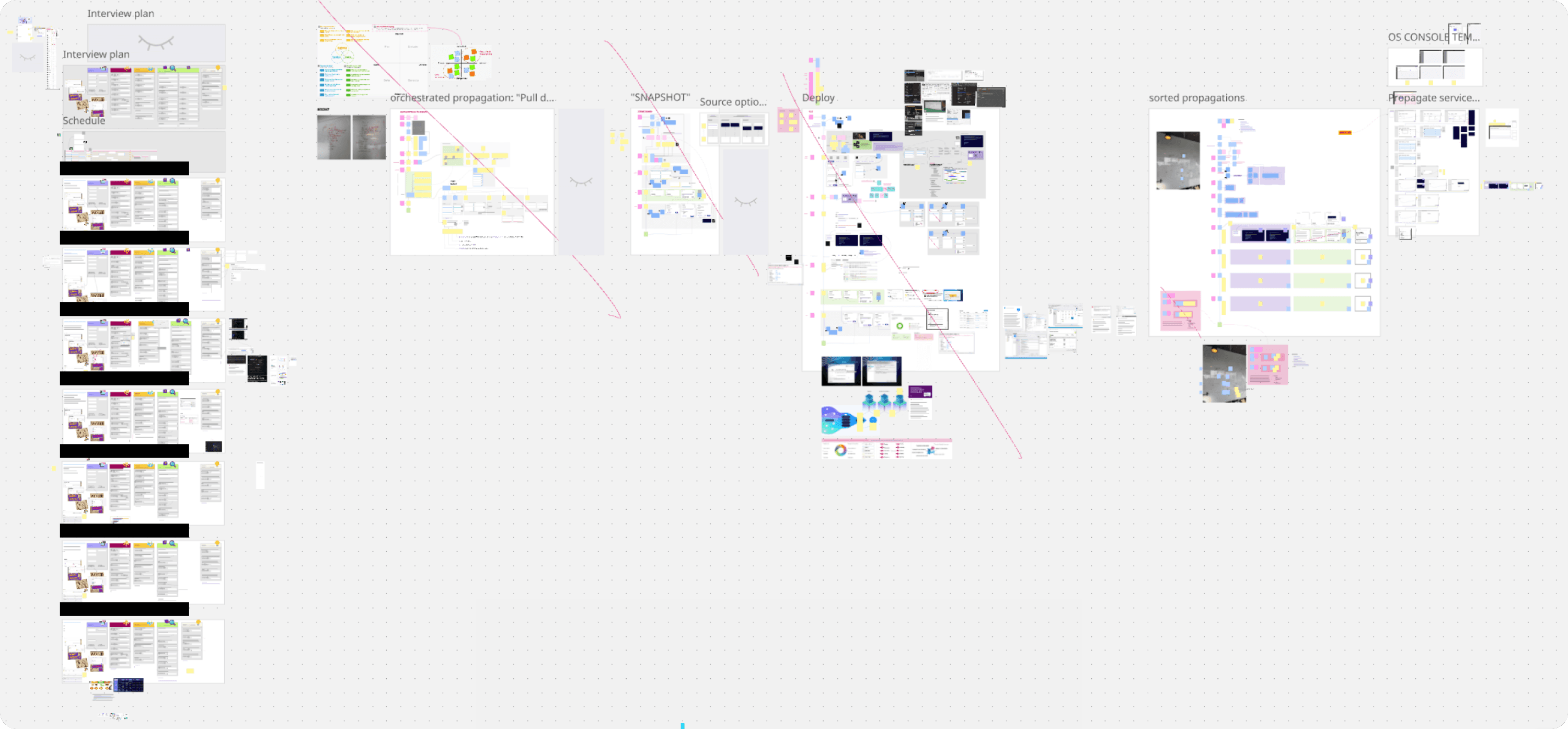
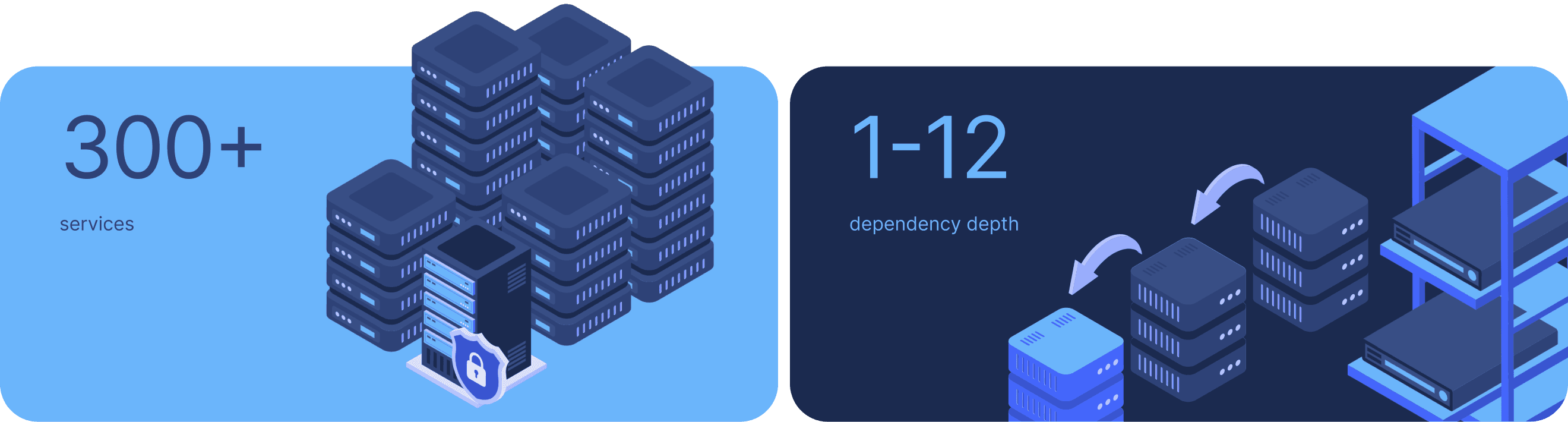
The meetings were spread over August and September 2024, where I met 12 people from 6 unique game productions. Some teams were located in France and others in Canada. Candidates were selected based on the advancement of their respective projects, and their involvement in live game services.
I alone was in charge of capturing, compiling and sharing their insights, struggles and motivations.
Workshop
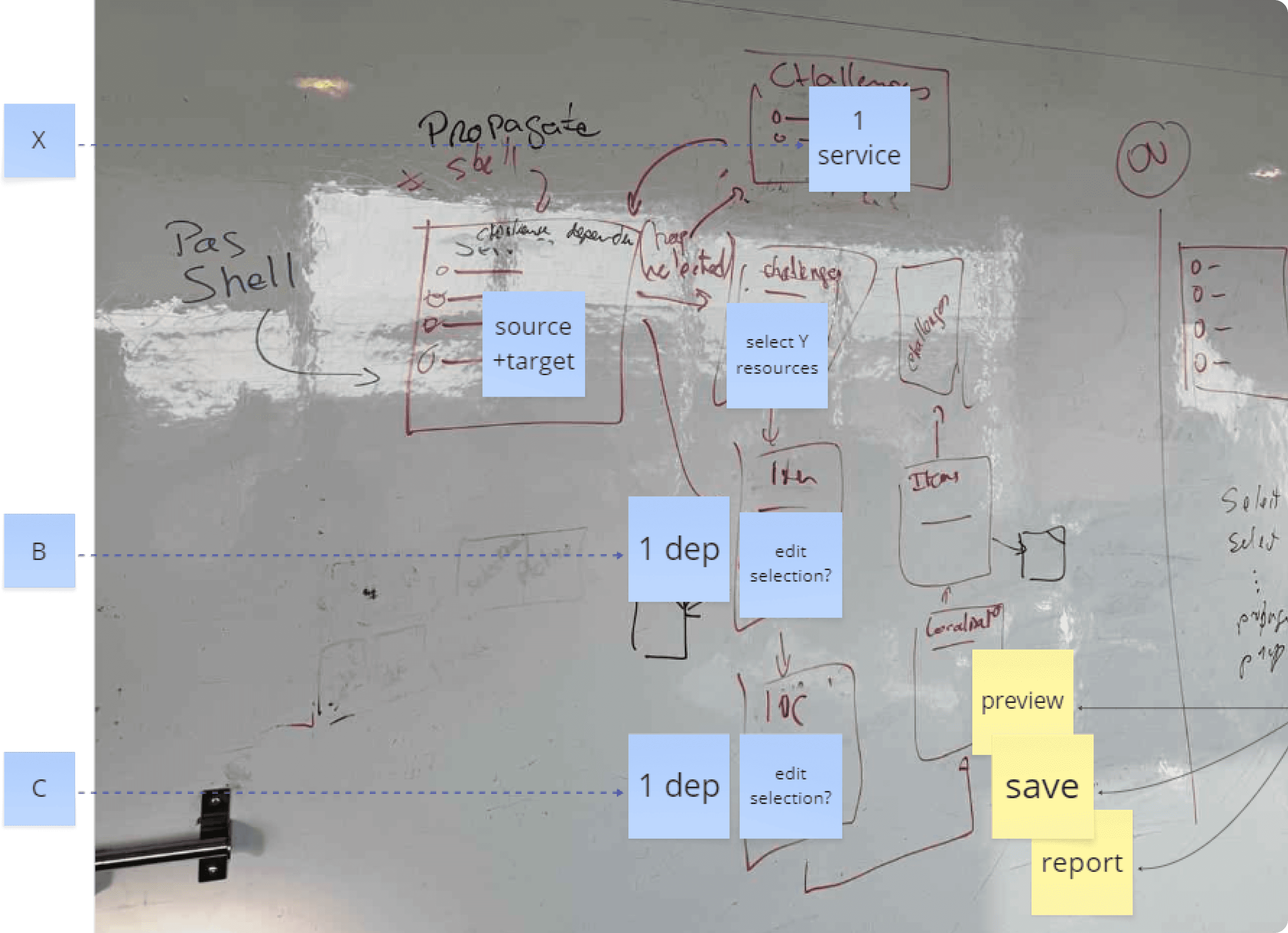
This study led to an ideation workshop with our executives, where we brainstormed around a scalable process, which would support a wide range of deployment scenarios - including those reported by our partners.
We identified key limitations and leverages of the actual system, and from there, we assembled a framework flexible enough to support shifting production pipelines, cost and security considerations, emergency situations, dynamic service-dependencies, and so on.
The outcome was a modular workflow, designed with transparency and security as top priorities. We agreed to build a new app, which we would roll-out into our current solution progressively.
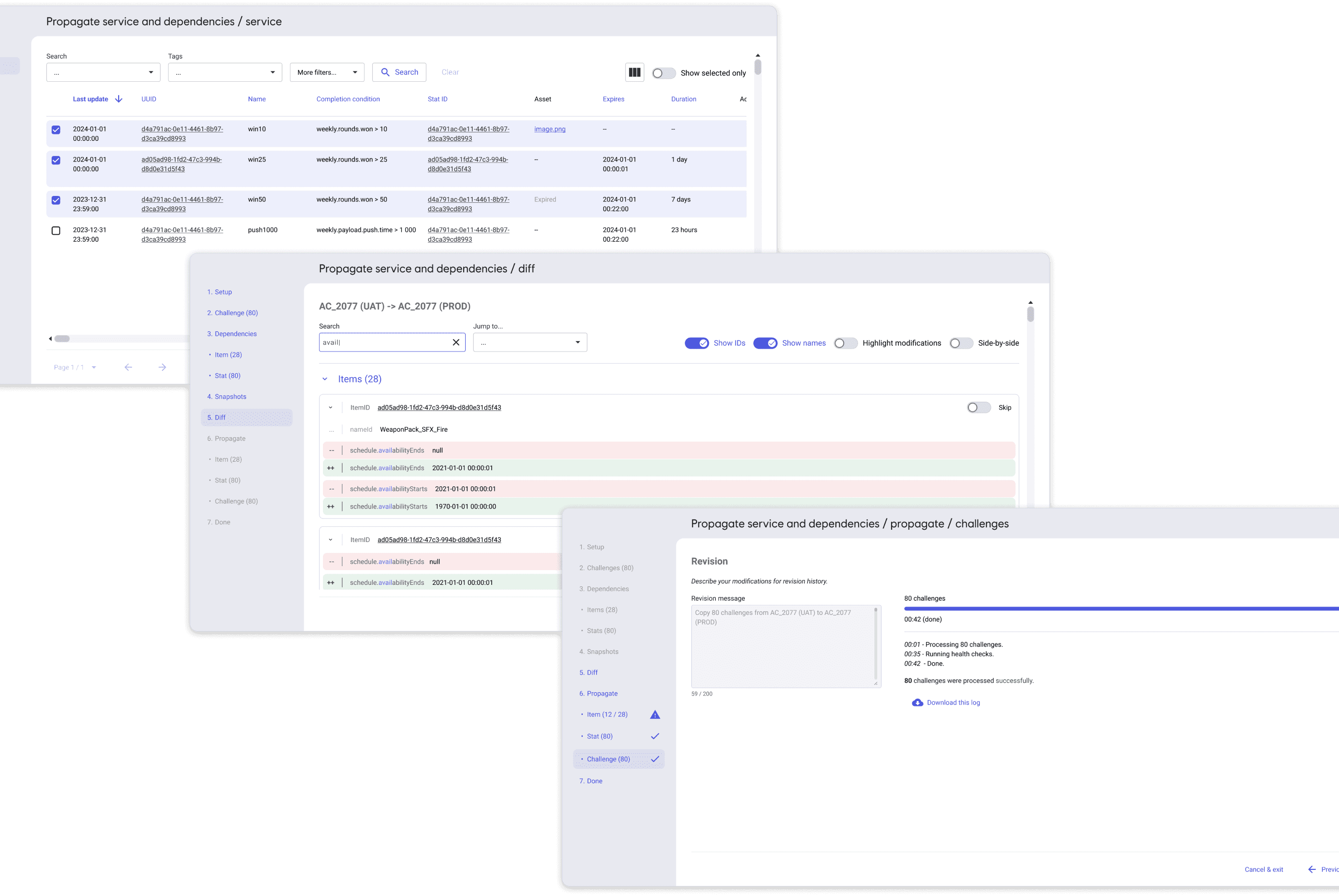
From this workflow, I sketched some wireframes - then I built interactive demos in Figma to share the end-product vision with our partners, engineering team, and design team, in progressive iterations.
How might we… speed up redundant operations?
Among the recurring pain points that surfaced during my interviews, one was unanimously mentioned: starting or retrying a deployment requires tedious steps to go through.
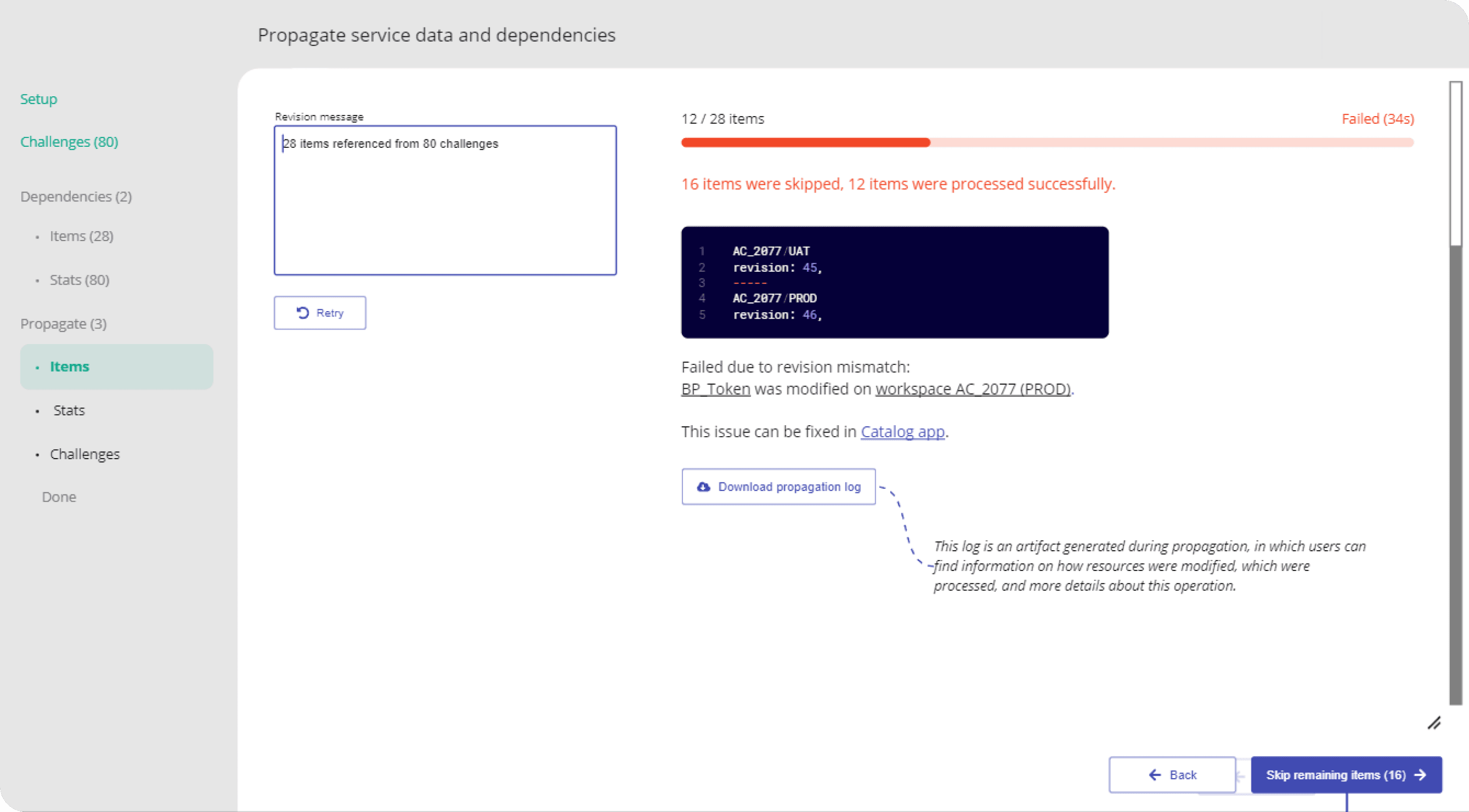
A quick competitive analysis revealed that by introducing key interactions (retry, skip, fix, etc) at specific steps of the user journey, we would be able to help them recover from failures, without leaving the page or restarting from the beginning.
To complement that, a special summary page was added at the end of the flow, where users could review what was done, download pipeline artifacts and output logs.
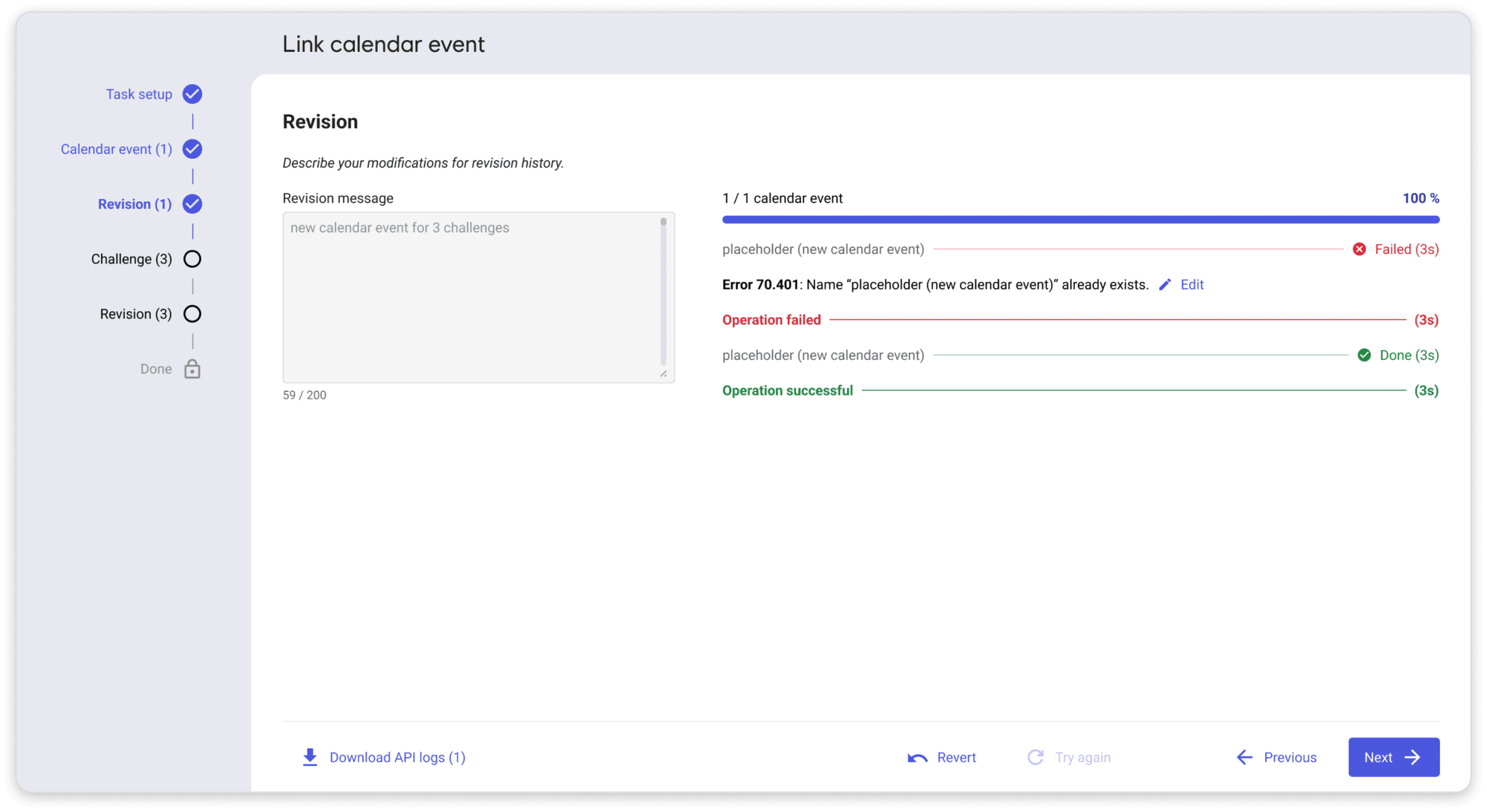
→ My objective was to introduce a stateful workflow - which would provide instant and relevant feedback, even after long pauses or interruptions - it would also remember a few scope variables to help with redundant steps. This process needed to be interactive, as most system failures could have easily been prevented if the user had the opportunity to “skip” some resources or “retry” the same operation again.
How might we… make the process more transparent?
We realized that our capacity to show progress and outcome in real-time was limited by opaque services, the information was scattered over several locations and users would easily loose track of it.
A series of creative workarounds emerged from the interviews, one of them had major advantages that also supported any amount of data: using snapshots would drastically simplify all operations. By making the system more predictable, we would make it seem less dangerous.
Adding snapshot support to our in-house versioning system could bring it up to industry standard and unlock modern workflows and automation.
I quickly mocked up some task sequences to see what that might look like in the context of our organization.
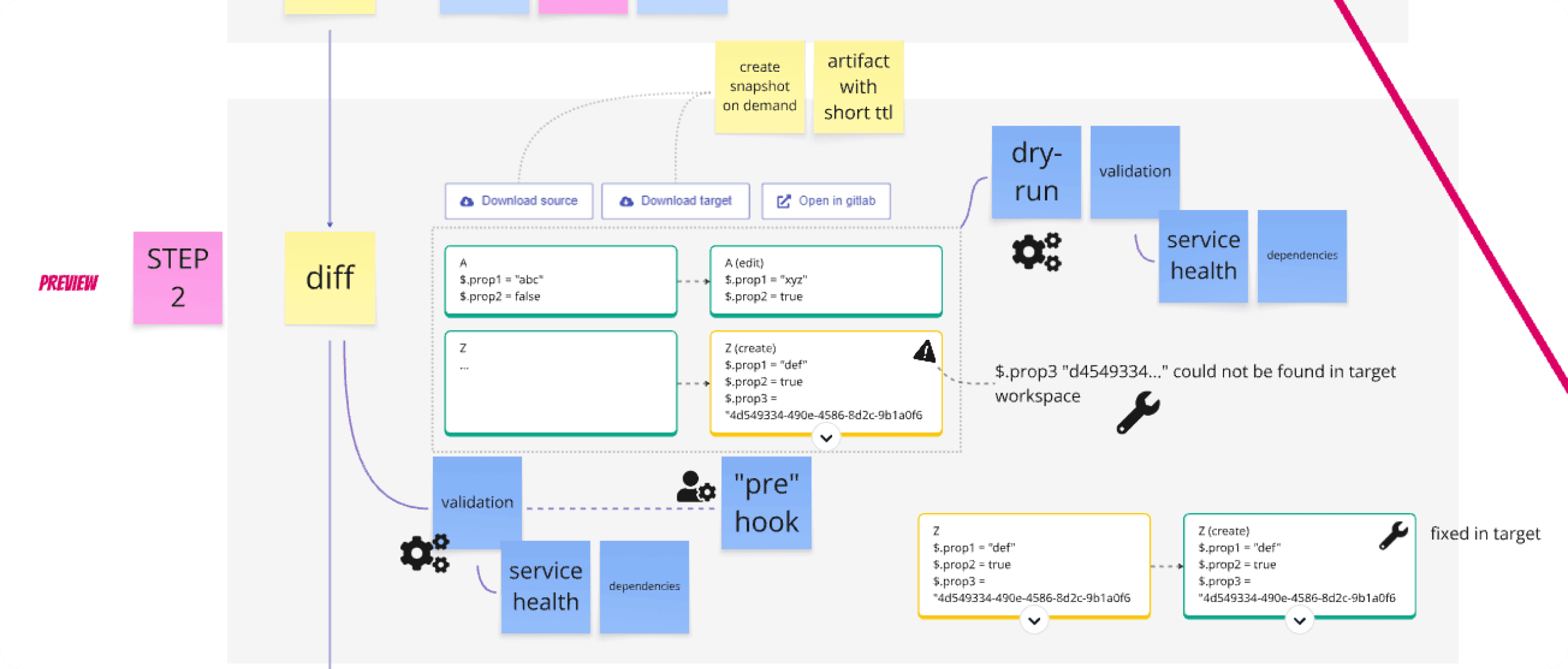
However, we couldn't add support for snapshots without compromising other business objectives, so instead, we focused on exposing report logs, which contains similar information.
The system already generated such files - we only needed to package them, and send them to cold storage with an expiration date.
Ultimately, these rough wire-flows helped articulate broader group objectives over the next quarters, which promoted automation and “tailored” customer experiences.
01
Final thoughts - ✧( •̀ .̫ •́ )✧
This initiative has highlighted multiple paths of improvements for our platform, but we were limited by a short deadline. This somewhat oriented our ideas toward a low-profile, plug-in, type of solution. Most of the complex logic - which runs in our services - would remain unchanged, so our goal was to smooth-out the overall journey with a new web app.
On a personal note, however:
I had the opportunity to meet and advocate for a dozen of incredible and talented individuals.
I was able to share a realistic picture of their expectations and valuable insights with our executives and stakeholders.
I worked side-by-side with our developers, helped bring the solution to life and make it available for other teams.
Together with my team of UX designers, we updated the enterprise design system and introduced new content such as layouts, UI elements, UX flows and recommendations, documentation... Most of it focused on searching and selecting resources, acting on a group of selected resources, paginating resources, reporting live server activity, and interaction guidelines for newly introduced features.
This project was successful as it revealed a way to enable and promote automation for our partners, giving them back authority over their operations, while laying down the foundations for new strategies to manage live game data.